
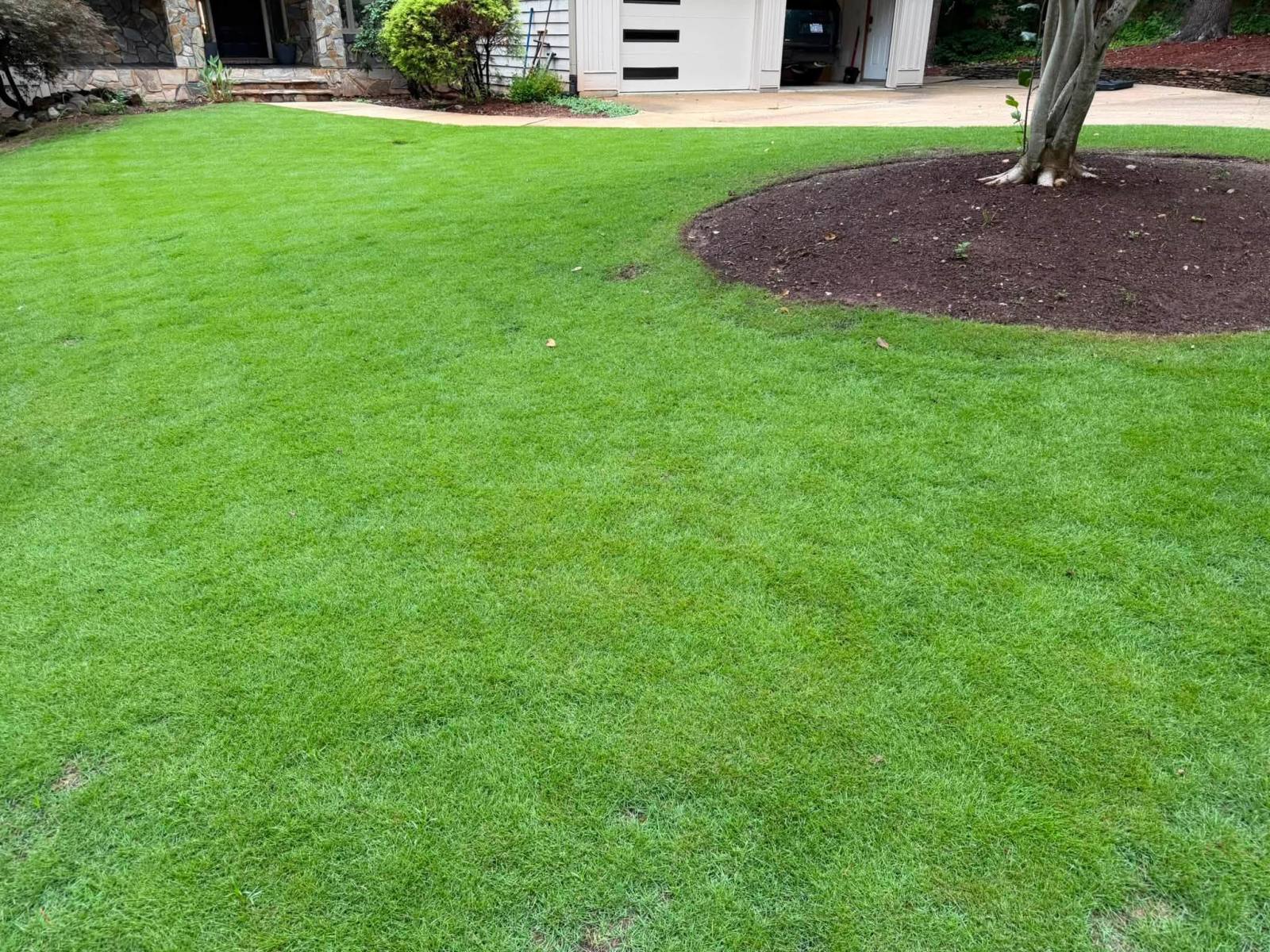
Organic soil treatment · Raleigh Triangle
Fix the soil.
The grass follows.
Aeration, certified compost and fescue over-seeding for the red clay under your lawn — by the man who does the work.
Takes about 2 minutes. No obligation, no sales call.
The actual problem
Thin, patchy fescue that dies every July is not a fertilizer problem.
It is a soil problem. Lawns in this part of North Carolina sit on Cecil-series red clay — fine, flat particles that pack down hard under mowing traffic until water runs off instead of soaking in and roots physically cannot get past the top two inches. On a new-construction lot it is worse again, because grading took the topsoil away before the sod went down.
A shallow root system fails the first hot, dry week of summer. That is not something another bag of nitrogen fixes; feeding a plant that cannot reach water is treating the symptom. What changes it is physical: pull cores out of the compacted layer, put organic matter back in, and give the soil structure it can hold water in again.
That is the entire business. Not mowing, not spraying — soil.
— Jay Cooper, Simply Spread LLC
What we do
Four treatments, one job: change what is under the grass.
Compaction
Core Aeration
Pulls thousands of soil cores out of the lawn, opening compacted clay so water, air and roots can move through it again.
Read the detailOrganic matter
Compost Topdressing
Spreads a thin, even layer of certified compost across the turf, raising soil organic matter so the ground holds water instead of shedding it.
Read the detailLeveling & drainage
70/30 Sand & Compost
A 70% sand, 30% compost blend worked into the surface to fill low spots and give water somewhere to go on heavy Triangle clay.
Read the detailTurf density
Fall Fescue Over-Seeding
Drops new tall fescue seed into an aerated, topdressed surface in the fall window, when soil is warm and the seed has two cool seasons to establish.
Read the detailWhy Simply Spread
Three things that make the difference.
Certified compost, not "compost blend"
The material going on your lawn is named, and its certification is named with it. "Compost blend" is a phrase that can mean almost anything, and usually does.
Built for Triangle clay
Cecil-series red clay compacts hard and sheds water. Every treatment here exists to change that physically, which is why the work is aeration and material rather than another bag of nitrogen.
One owner on every job
Jay Cooper quotes the work, does the work, and is the person you call afterwards. There is no crew, no subcontractor, and no one you have not met on your property.
How it works
Three steps. No guesswork.
Test the soil
We measure the lawn from satellite imagery, then look at it in person and test what is actually under the grass — pH, organic matter, compaction. No treatment gets recommended before this.
Build the plan
You get a written plan naming exactly what is being done, what material is going down, what it costs, and what it will not fix. If the honest answer is that a different trade should handle it, that is what you get told.
Do the work, then check it
The work happens in the right seasonal window, not whenever there is a gap in the calendar. Afterwards we re-test and tell you whether the soil actually moved.
Recent work
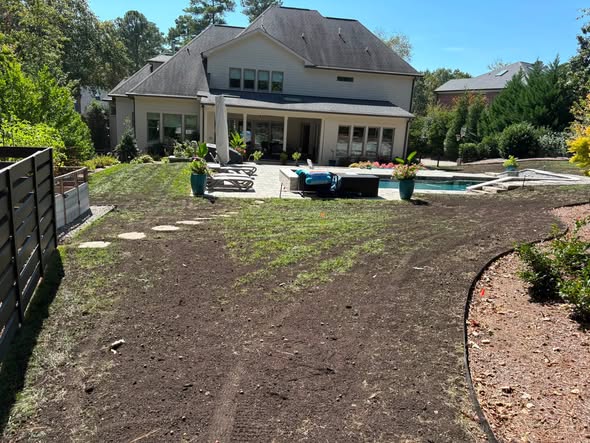
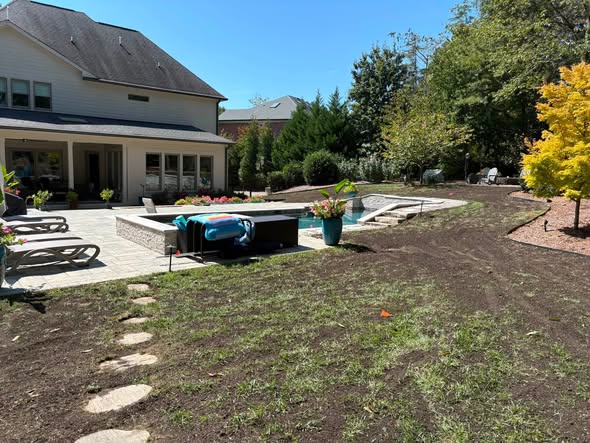
Willow Spring, mid-job.
Aeration and compost topdressing going in, then the same lawn seeded. True one-season comparisons go up on the before & after page as each season completes.
The fall window
September to mid-October decides next year's lawn.
In a cool-season fescue market the calendar is not flexible. Soil needs to still be warm enough for seed to germinate quickly, and the air cool enough for new grass to establish without running straight into summer. That overlap is roughly six weeks.
Aeration, compost topdressing and over-seeding all belong in that window, and they work best done together on the same visit. Booking fills up through September.
What happens when
- Sept – mid Oct
- Core aeration, compost topdressing, 70/30 leveling, fescue over-seeding. The main window.
- Late Oct – Nov
- Soil testing and amendment planning for next season.
- Mar – May
- Secondary window. Topdressing and amendment work; over-seeding only where it makes sense.
- Jun – Aug
- Assessment and planning. We will not seed into a Triangle summer and charge you for it.
Where we work
Wake, Johnston and Harnett counties.
Based in Willow Spring. If you are just outside this list, ask anyway — it may still be a reasonable drive.
Straight answers
The questions people actually ask.
Why don't you list prices?
Because a number without a measurement is a guess, and a guess that turns out to be wrong on site helps nobody. Two lawns of the same size can be very different jobs depending on grass type, how compacted the soil is, how much of the property is actually treatable turf, and how much access there is. The quote you get is measured, not estimated.
What determines what my lawn costs?
Three things. Treatable square footage — beds, drives and gravel come out of that number. Grass type, because it changes both the timing and the seed. And current soil condition, because a badly compacted lawn may need a double aeration pass where another needs one. Jay Cooper measures from satellite imagery first, then confirms it on site before anything is finalised.
Does organic lawn care actually work, or does it just take longer?
Both, honestly. It works, and it takes longer. A synthetic nitrogen application greens a lawn in about a week by feeding the plant directly. Building soil organic matter feeds the soil instead, which is slower and does not reverse the moment you stop. Year one you will see a difference. Year three the lawn holds water through a dry August without much help. If you need a green lawn by next Saturday, this is the wrong service.
What is the difference between certified compost and "compost blend"?
Certification means the material has been tested — for maturity, for stability, for contaminants, and for whether it is actually finished compost rather than partially decomposed material that will rob nitrogen from your lawn as it finishes breaking down. "Compost blend" is an unregulated marketing phrase. It can mean certified compost mixed with something cheaper, and frequently does.
Why sand and compost together — what does 70/30 actually do?
The sand does the structural work: coarse particles hold open pore space that water can drain through, which heavy clay does not do on its own. The compost keeps the mix biologically alive and stops it setting up hard. Sand on its own over clay is a well-known way to make something closer to concrete — the ratio and the compost fraction are what make the blend work rather than backfire.
Who does the work
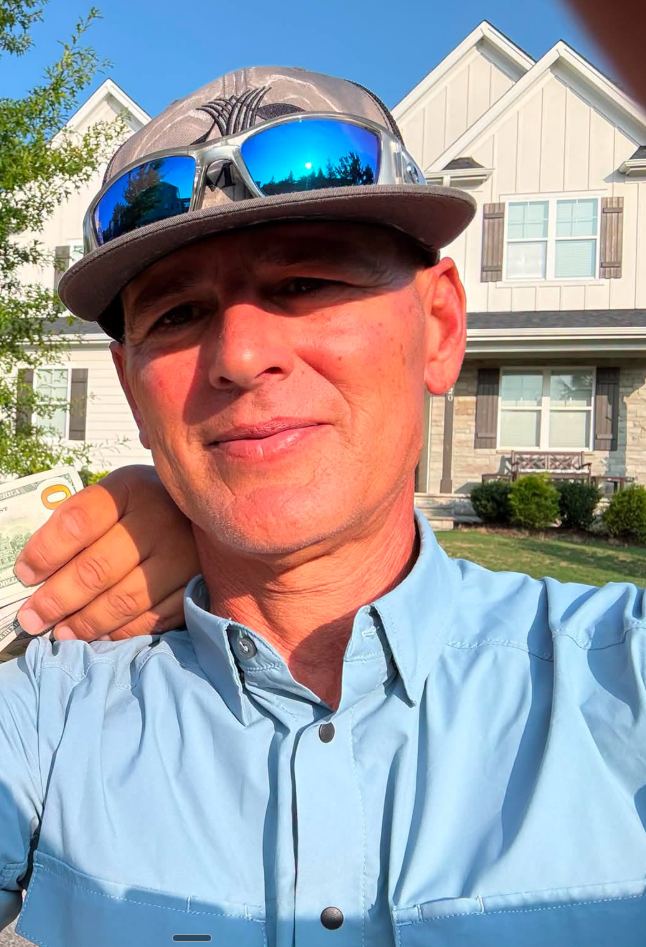
Jay Cooper
NC native. Owner-operated. The person who quotes your lawn is the person who treats it.
Simply Spread went soil-first for a simple reason: the lawns that stay good are the ones with soil that works, and almost nobody in this market is selling that. Plenty of companies will spray a lawn. Very few will test it, tell you the honest timeline, and then say no to work that will not succeed.
Soil amendment is a two-to-three season program, not a spray. Year one you will see the difference. Year three you will stop thinking about your lawn.
Fix the soil.
The grass follows.
Tell us where the lawn is and what is wrong with it. Jay takes it from there.
Takes about 2 minutes. Or call (919) 495-5850.