
Compaction
Core aeration
Pulls thousands of soil cores out of the lawn, opening compacted clay so water, air and roots can move through it again.
The problem it solves
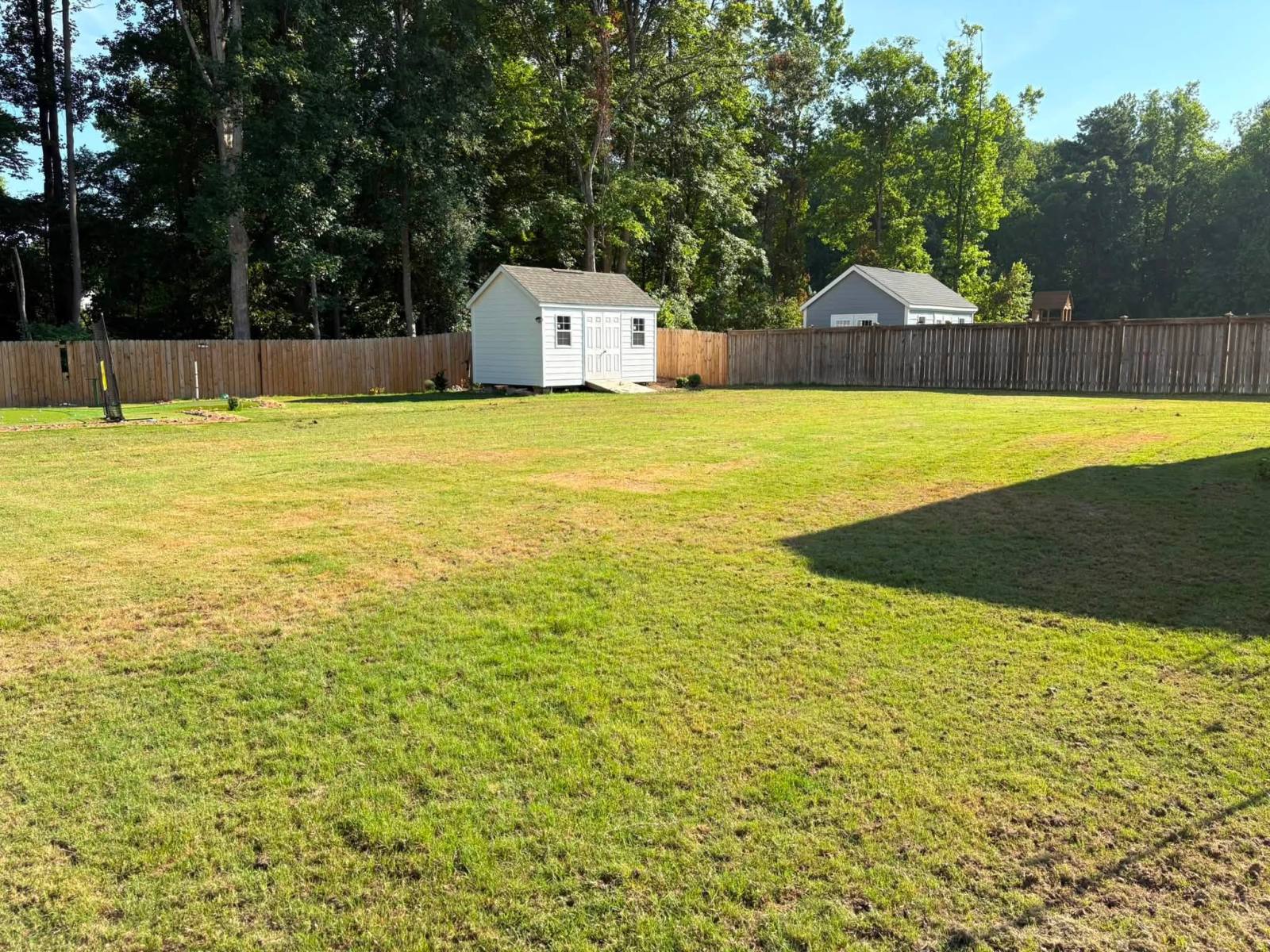
Water pools after a storm and the lawn is still soggy two days later, or it runs straight off and the grass browns out in July. Both are the same problem: the top few inches of soil are compacted hard enough that neither water nor roots can get through.
What actually happens
A core aerator pulls thousands of soil plugs out of the lawn — actual cores, roughly two to three inches deep, removed and left on the surface to break down. It is not spike aeration, which just pushes a hole through compacted soil and compacts the walls of the hole further. Removing a core is what genuinely relieves pressure, because it creates space the surrounding soil can expand into.
Why it matters here
Triangle lawns sit on Cecil-series red clay. Clay particles are small and flat, and under mowing traffic they pack into a layer roots physically cannot penetrate. You can put down all the nitrogen you like; a root system trapped in the top two inches will still fail in the first hot dry week of summer.
When it should happen
Early September through late October is the window in a cool-season fescue market. Soil is still warm, air is cooling, and the lawn has two mild seasons ahead of it. Spring aeration is possible but it opens the surface just as summer annual weeds are germinating.
What’s included
- Single or double pass, agreed before the work starts — a double pass roughly doubles the hole density and is the default on badly compacted lawns
- Cores left on the surface to break down naturally, which returns that soil and its microbiology to the lawn
- Irrigation heads and shallow utilities marked and worked around where you flag them for us
- Treatable turf area measured from satellite imagery and confirmed on site
What this will not do
Worth reading before you book. It is cheaper for both of us to find out here than on the day.
- Beds, mulched areas and gravel are not aerated and are not counted in the treatable area
- Aeration will not correct a grading or drainage fault — if water is coming off a roof or a neighbouring property, that is a different job
- We do not aerate over an irrigation system whose heads have not been marked
- Very wet or frozen ground does not aerate cleanly and the work gets rescheduled rather than forced
Priced on treatable square footage, measured from satellite imagery and confirmed on site. Beds, drives and gravel come out of the number. How pricing works.
Usually done together
These belong on the same visit.
Not an upsell — the treatments genuinely work better in combination, and one visit costs less than two.
Organic matter
Compost Topdressing
Spreads a thin, even layer of certified compost across the turf, raising soil organic matter so the ground holds water instead of shedding it.
Read the detailTurf density
Fall Fescue Over-Seeding
Drops new tall fescue seed into an aerated, topdressed surface in the fall window, when soil is warm and the seed has two cool seasons to establish.
Read the detailWant this done on your lawn?
Tell us where it is and what’s wrong with it.
Takes about 2 minutes. Or call (919) 495-5850.